Written by Steve Chiu
Edited by Adriana DiBenedetto
For over three decades, the international community has convened at the annual Conference of the Parties to the United Nations Framework Convention on Climate Change (COP), promising to halt global warming and safeguard our common home for future generations. Yet, despite remarkable milestones, the world remains far from achieving the ambition required to keep temperature rise below 1.5°C. Implementation lags, localization falters, and systemic behaviors rooted in profit-driven models continue to dominate decision-making. Too often, climate policy has been filtered through the lens of feasibility measured in dollars and returns rather than through the lens of values and human dignity. The “why” of climate action – our moral responsibility to protect life and live in harmony with the Earth – has been overshadowed by a system intent on perpetuating itself.
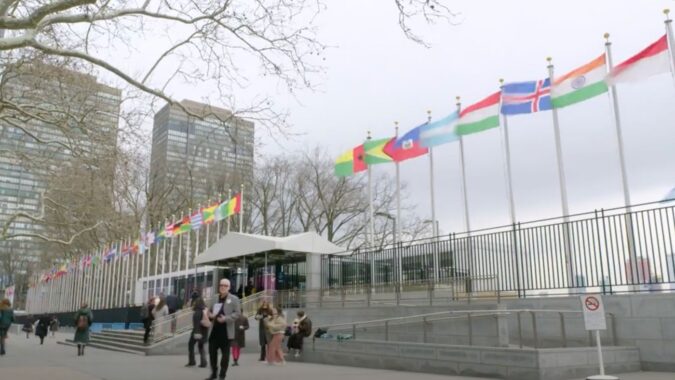
It is against this backdrop that Climate Week NYC and the upcoming COP offer more than technical negotiation spaces. They are moments for ethical stocktaking, opportunities to pause, reflect, and ask what deeper motivations, wisdom, and values must guide the transition to truly transformative systems. If the climate crisis is, at its core, rooted in a misalignment of motivations, then values-based action must become central to sustainable solutions. This is where faith actors and faith-based humanitarian organizations, such as the Buddhist Tzu Chi Foundation, bring unique insights.
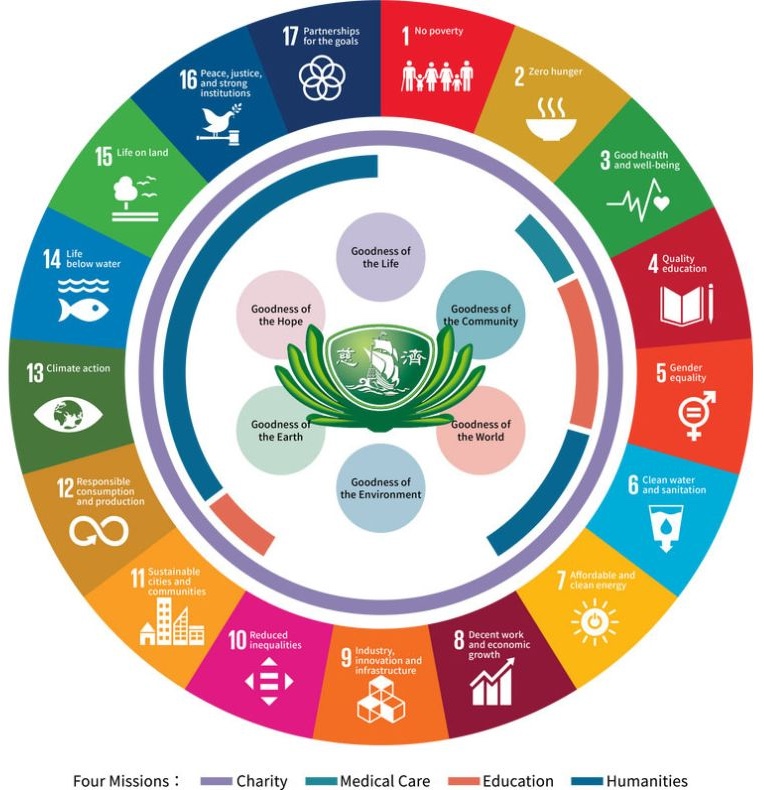
From the humble bamboo banks of Hualien in 1966, when Tzu Chi founder Dharma Master Cheng Yen asked supporters in Taiwan to set aside a small daily amount in simple coin banks made from bamboo to help those in need, to a humanitarian presence spanning 139 countries and regions worldwide, Tzu Chi has consistently embodied the principles of compassion, equity, and interdependence – principles that the UN would later enshrine in the Sustainable Development Goals (SDGs) in 2015. Through its Four Great Missions and Eight Global Footprints – Charity, Medicine, Education, Humanistic Culture, Disaster Relief, Bone Marrow Donation, Environmental Protection, and Community Volunteerism – Tzu Chi has offered a living model of how values-based action can create lasting systemic change.
Each mission resonates with the SDGs: charity alleviates hunger and poverty (SDGs 1, 2), medicine advances health as a human right (SDG 3), education nurtures responsible global citizens (SDG 4), and humanistic culture promotes peace and partnership (SDGs 16, 17). Environmental protection, one of Tzu Chi’s most recognized footprints, aligns with climate action and ecological stewardship (SDGs 12, 13, 14, 15), advancing a vision of coexistence with the environment through recycling, plant-based and sustainable living, and disaster risk reduction. Together, these missions and footprints highlight that sustainable development is not only about policies and institutions, but also about daily choices, shared values, and the spirit of volunteerism.
At this critical juncture, when Climate Week and COP dialogues must reckon with how to contract unsustainable systems and incentivize transformative ones, Tzu Chi’s experience offers both inspiration and practical pathways. Its model demonstrates that communities, when grounded in compassion and guided by spiritual wisdom, can build resilience, reduce disaster risk, and foster ecological harmony. Nearly ten million volunteers and supporters across continents embody what it means to prioritize humanity and the planet over profit, reminding policymakers, negotiators, and civil society of what is at stake: not just emissions targets, but the survival of our shared home and the flourishing of future generations.
As world leaders, policymakers, and civil society convene in New York and later at COP, Tzu Chi contributes not only as a faith-based humanitarian actor, but also as a moral voice. Its decades of action show that profound transformation emerges when compassion, interdependence, and Great Love are placed at the center of collective efforts.
Turning Waste into Dignity: Pioneering Waste Reduction for People and Planet
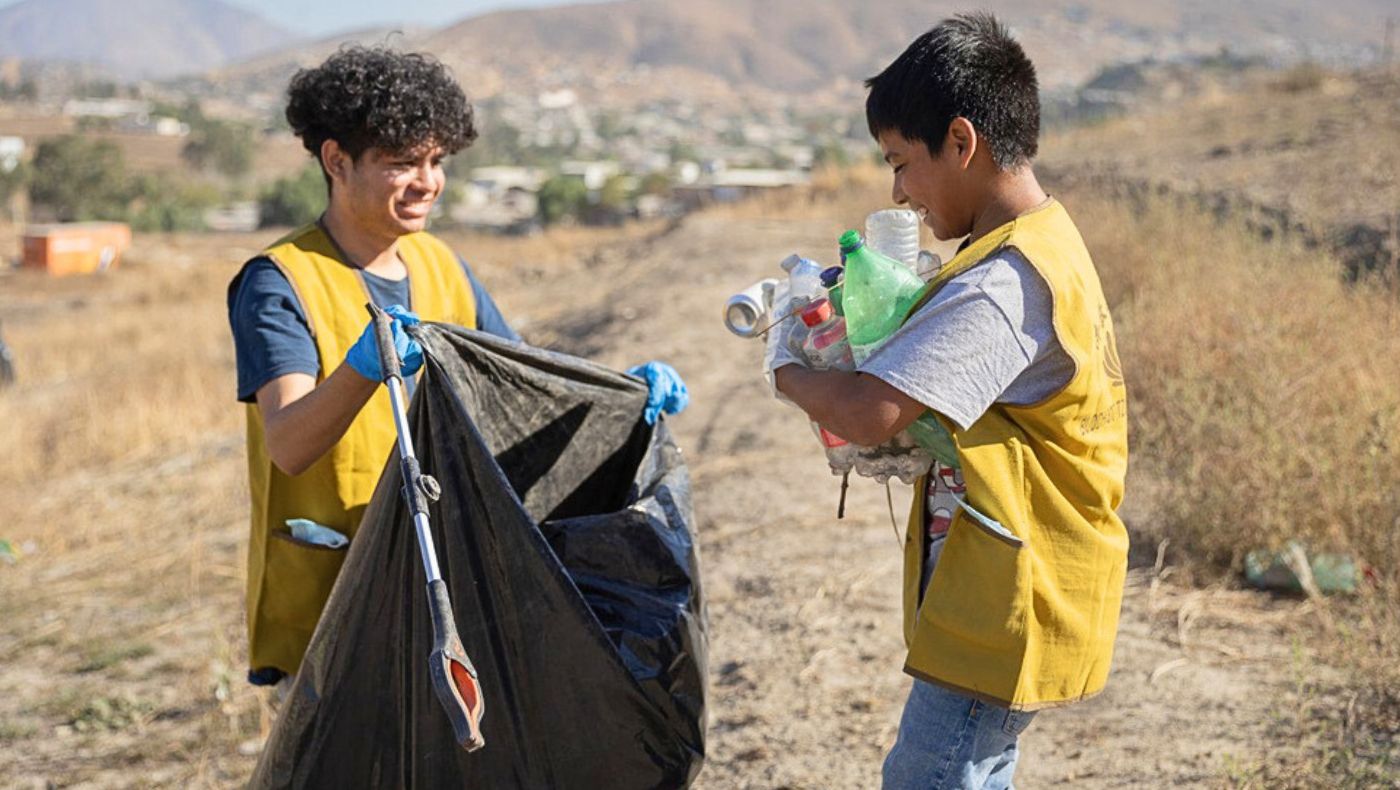
Tzu Chi’s recycling efforts are among the most extensive volunteer-based systems in the world, built on Dharma Master Cheng Yen’s call, since 1990, to “use your applauding hands to protect the environment.” Today, over 10,000 recycling stations and hubs in 17 countries serve as collection depots and community centers where ecological awareness, human solidarity, and compassionate values converge.
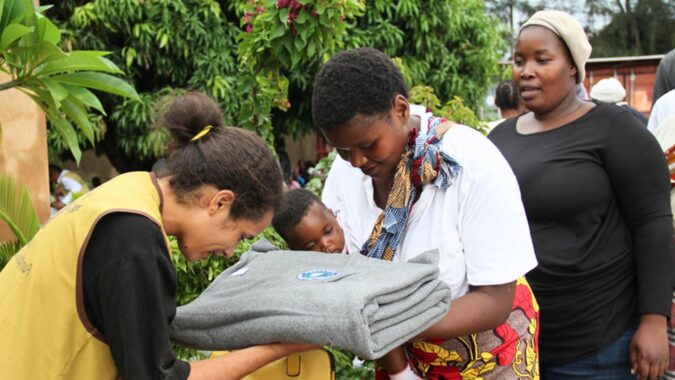
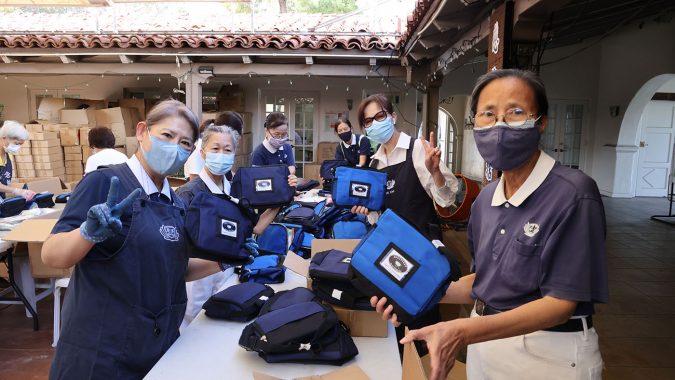
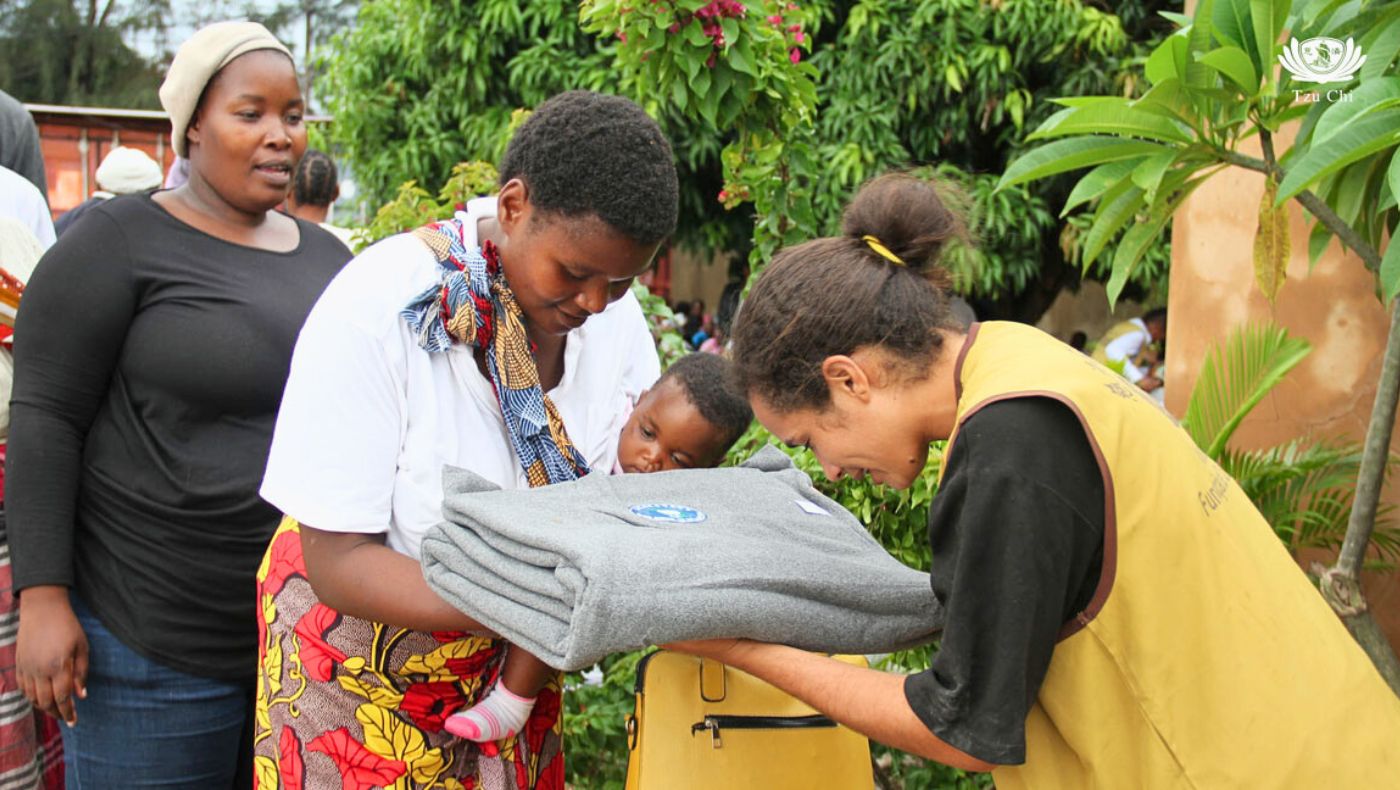
The impact is tangible. Bottles, cans, electronics, and paper that would have polluted land and oceans are transformed into humanitarian resources. As reflected in the 2023 Sustainability Report released by DA.AI Technology, approximately 60 million PET bottles are used each year to produce high-quality eco-fabric and eco-yarn, creating sustainable eco-blankets, uniforms, and backpacks for use in disaster relief and daily life. The model is circular: trash becomes compassion in action, and recycling funds support Tzu Chi’s charity, medicine, education, and disaster relief missions.
Recent initiatives show how waste reduction reshapes culture. In Colombo, Sri Lanka, university students such as Sameera Dulshan and Lakesha Dias have joined door-to-door recycling campaigns, shifting waste from passive disposal to active community management. Residents now request Tzu Chi’s monthly pickups, proving that recycling has become a habit rather than an occasional gesture. In Hambantota, Sri Lanka, a 2025 training inspired participants like Frances Salome to conserve water and electricity more intentionally, while youth leaders gained confidence through eco-action workshops.
From Jakarta’s Angke River restoration to Malaysia’s “Trash into Gold” program, where recyclables fund medical and educational services, Tzu Chi demonstrates that waste reduction is not only possible – it is transformative when grounded in compassion, community, and values-based action.
Compassion on Every Plate: Ethical Eating and Food Systems Transformation
Tzu Chi has long championed plant-based living, rooted in the Buddhist ethic of compassion for all sentient beings. In every school, hospital, and event it organizes, only vegetarian meals are served, proving that institutions can model sustainability at scale. This practice reduces greenhouse gas emissions, conserves water, and protects both land and ocean ecosystems, directly advancing SDGs 12, 13, 14, and 15.
Tzu Chi’s influence is visible in community innovation. In Singapore, the Food Farmacy launched in 2024, providing low-income patients with plant-based groceries, nutritional counseling, and cooking classes. By sourcing from local farmers, it creates healthier diets and more resilient local food systems. Tzu Chi Singapore also organizes World Ethical Eating Day, where 36 vegetarian eateries offer discounts, encouraging thousands to try plant-based meals. As volunteer Rachel Tan reflected, participating businesses supported the cause “whether or not their sales increased,” demonstrating a shift from profit to a shared purpose.


Global initiatives, such as the Very Veggie Movement and youth-led 30-Day and 21-Day Veggie Challenges, have inspired thousands worldwide to reduce their meat consumption, demonstrating that values-based campaigns can shift social norms. Meanwhile, advocacy at international forums – such as COP29, where Tzu Chi called for climate-friendly catering, and the UN Food Systems Summit, where it joined interfaith coalitions advocating for food systems rooted in faith values – links grassroots practices with systemic transformation.
Food waste recovery is another hallmark solution from Tzu Chi’s recycling centers. In the Asia Pacific, nearly 9,000 recycling stations integrate composting, while in Singapore, Green Charity Fairs halve event food waste. In California, youth volunteers facilitate composting workshops, showcase organic fertilizer markets, and serve nutritious vegetarian lunches made from rescued food at Earth Day Carnivals, modeling solidarity in action. These efforts show that the future of food is not only about production, but also about compassion, equity, and rethinking consumption.
Beyond Tomorrow: Youth Leaders Shaping a Sustainable Future
Tzu Chi believes the climate struggle will be won or lost in the hearts of the next generation. Across Asia, Africa, and the Americas, Tzu Chi youth are stepping into leadership, transforming awareness into sustained action.
In the Philippines, the 2024 Charity Run for Education incorporated eco-conscious practices into every detail, featuring singlets made from recycled PET bottles, reusable wheat straw cups, and volunteer-run recycling areas. Abella Sanchez expressed pride in the youth volunteers’ role maintaining the recycling area. “It was a good experience, because we were able to help people and also help keep the environment clean.” Wilma Buenaventura reframed recycling as both an ecological duty and humanitarian care, saying, “Even if it’s hard, I enjoy [helping]… Our recyclables are well-segregated and we can give life to recyclables that can be sold to generate more funds that can help people in need.”
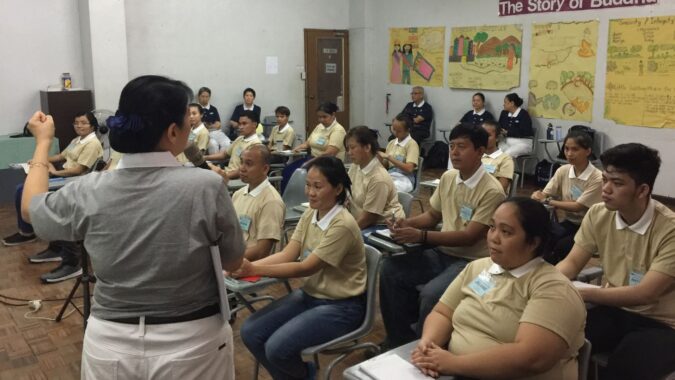
In Malaysia, over 500 students joined a three-day environmental education camp in July 2025, learning hands-on practices like turning old t-shirts into bags and making candles from used cooking oil. These creative activities empowered children to see themselves as problem-solvers with real-world impact. In Sri Lanka, youth leaders lead recycling outreach in Colombo, transforming resident habits and inspiring a cultural shift toward environmental responsibility.

Globally, the International Youth Leadership Program (IYLP) trains and empowers young adults to develop community projects and represent Tzu Chi at forums like COP29. The Youth Innovation Prize Challenge has spurred projects like the Green Jobs Initiative, linking ecological sustainability with employment futures. Meanwhile, in the United States, Tzu Chi youth lead coastal cleanups from San Clemente Beach to Chesapeake Bay, treating every fragment of waste as a moral responsibility.
In the work of Tzu Chi, youth are not merely participants in climate action – they are leaders of transformation. By combining education, service, and advocacy, they embody the truth that the solutions humanity needs already exist in the creativity, compassion, and leadership of young people – awaiting support, scaling, and sustainable partnerships.
The Next Chapter of Climate Action: From Profit to Purpose, From Talk to Transformation
For 30 years, COP negotiations have charted pathways toward climate stability, yet ambition continues to be undercut by systemic challenges and profit-driven paradigms. What Tzu Chi’s experience demonstrates is that the answers are not abstract or distant – they are already here. From waste reduction networks that turn waste into dignity, to plant-based food systems that conserve ecosystems and feed communities, to youth leadership that redefines what it means to care for the planet, Tzu Chi has been modeling solutions for decades.
These efforts prove that when compassion is organized, it generates not only humanitarian relief but also scalable, systemic transformation. The spirit of volunteerism, the ethic of non-harming, and the recognition of our interdependence have enabled millions of people to live the change that governments are still negotiating.
What remains is the courage and collective will to elevate these values-based solutions from the margins to the mainstream – to scale them through partnerships, embed them in policy, and empower communities everywhere to act. As world leaders gather in New York for Climate Week and again at COP, Tzu Chi offers both a challenge and an invitation: to reclaim the “why” of climate action and ground it in compassion, justice, and solidarity.
The climate crisis is a crisis of misaligned motivations. Re-aligning those motivations and grounding them in shared values is the pathway to a just, sustainable, and flourishing future – for people, for the planet, and for generations yet to come.
Everything, from protecting the Earth to doing good for humankind, begins with ourselves.
Jing Si Aphorism by Dharma Master Cheng Yen